
Our makers
Saheli Women. Artisan Sewing Collective
JODHPUR · RAJASTHAN, INDIA
Saheli. सहेली. Girlfriend club.
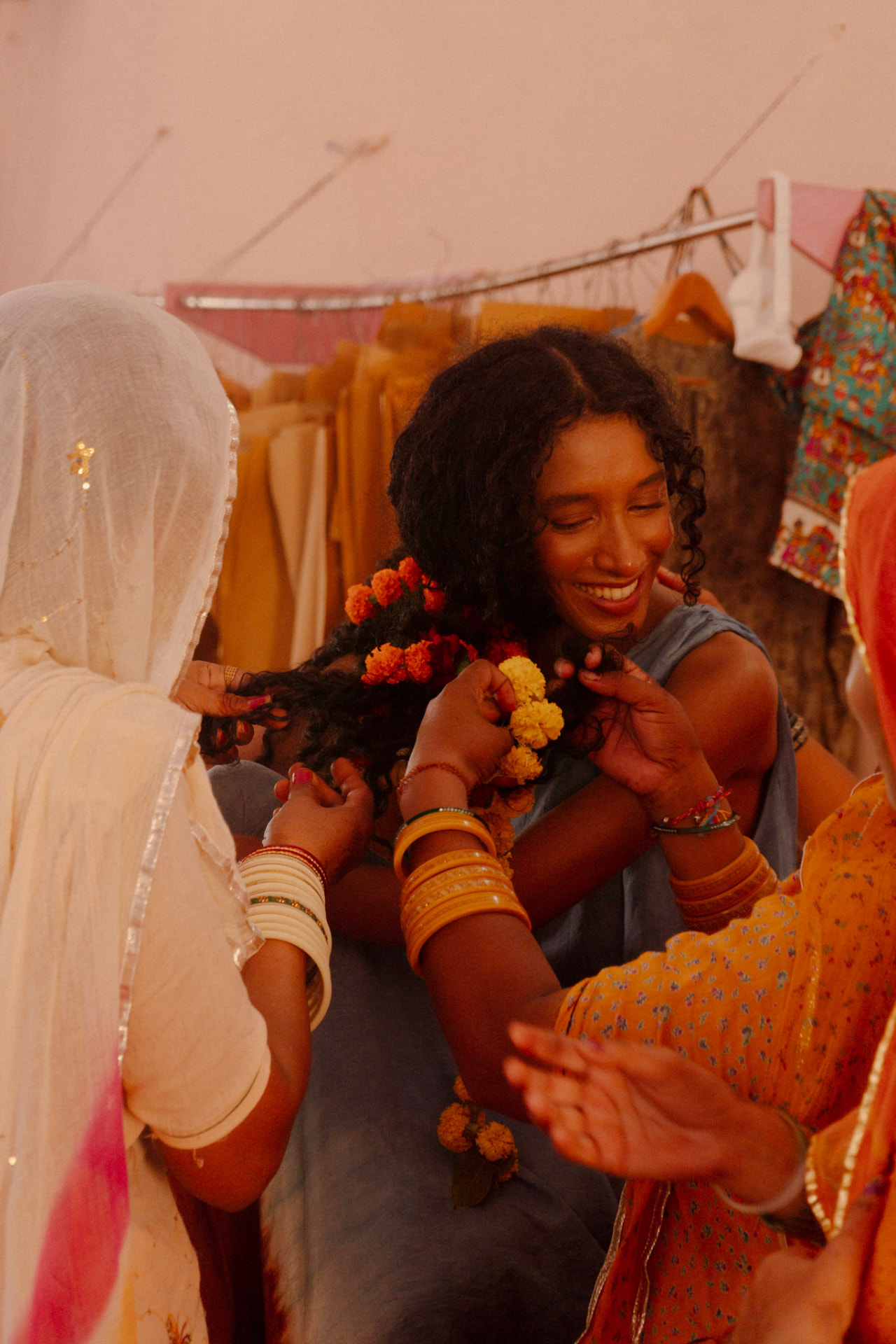
In Hindi, Saheli means female friend. The kind of friend who knows your worth before you, who is always there to help you. When you step into Sahel Women's centre you feel the energy before you understand it. There is music. There is laughter. There are women working and talking and dancing between tasks. Children playing in the courtyard.
This is not a factory. It is not a workplace in the conventional sense. It is a community, built by women, for women, around the radical idea that work should feel like belonging.
The women here choose their own hours. They bring their children when they need to, there will always be someone to hold them, or they will play with the others in the garden. The garden that grows marigolds for dyeing and vegetables for the whole village to share.
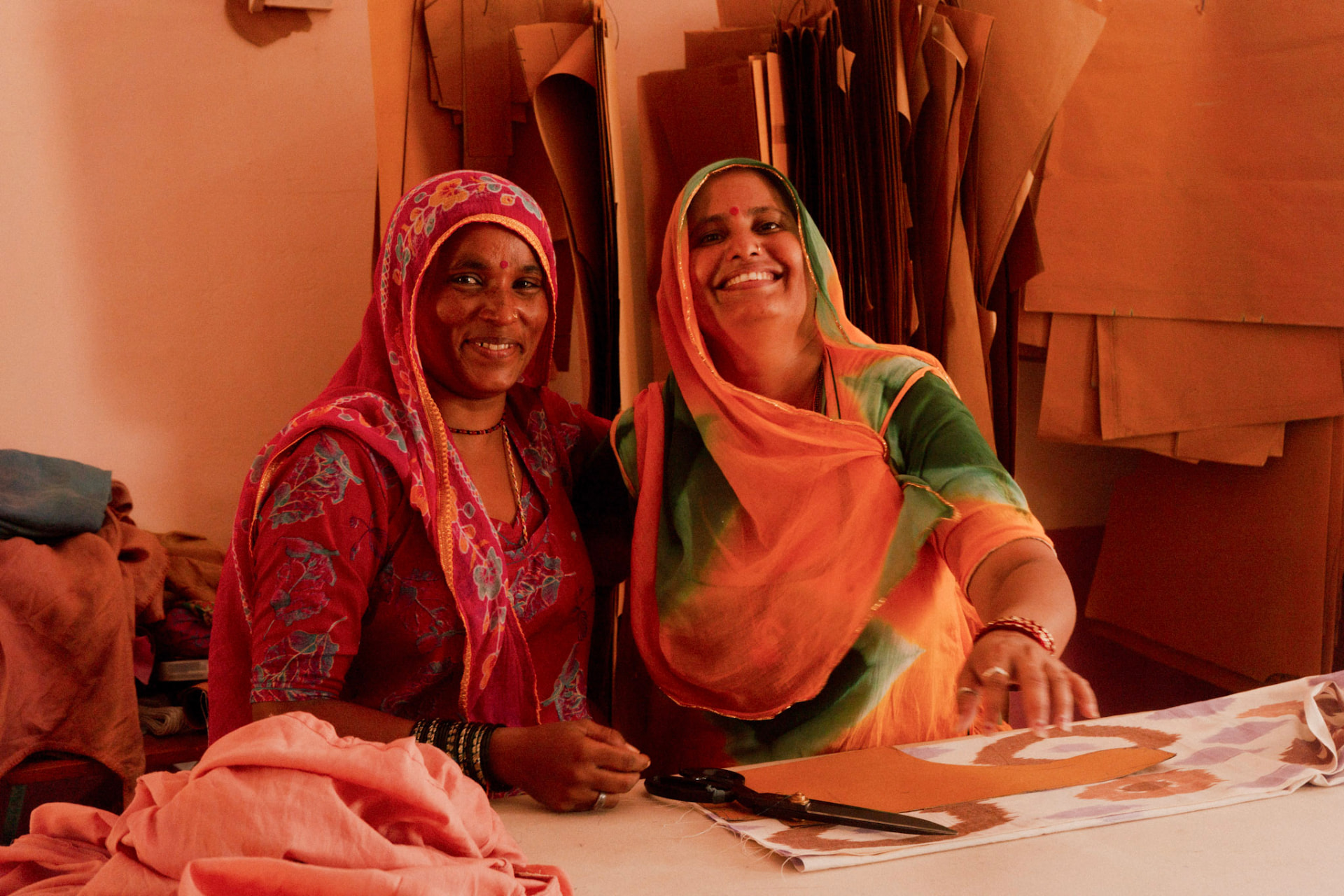
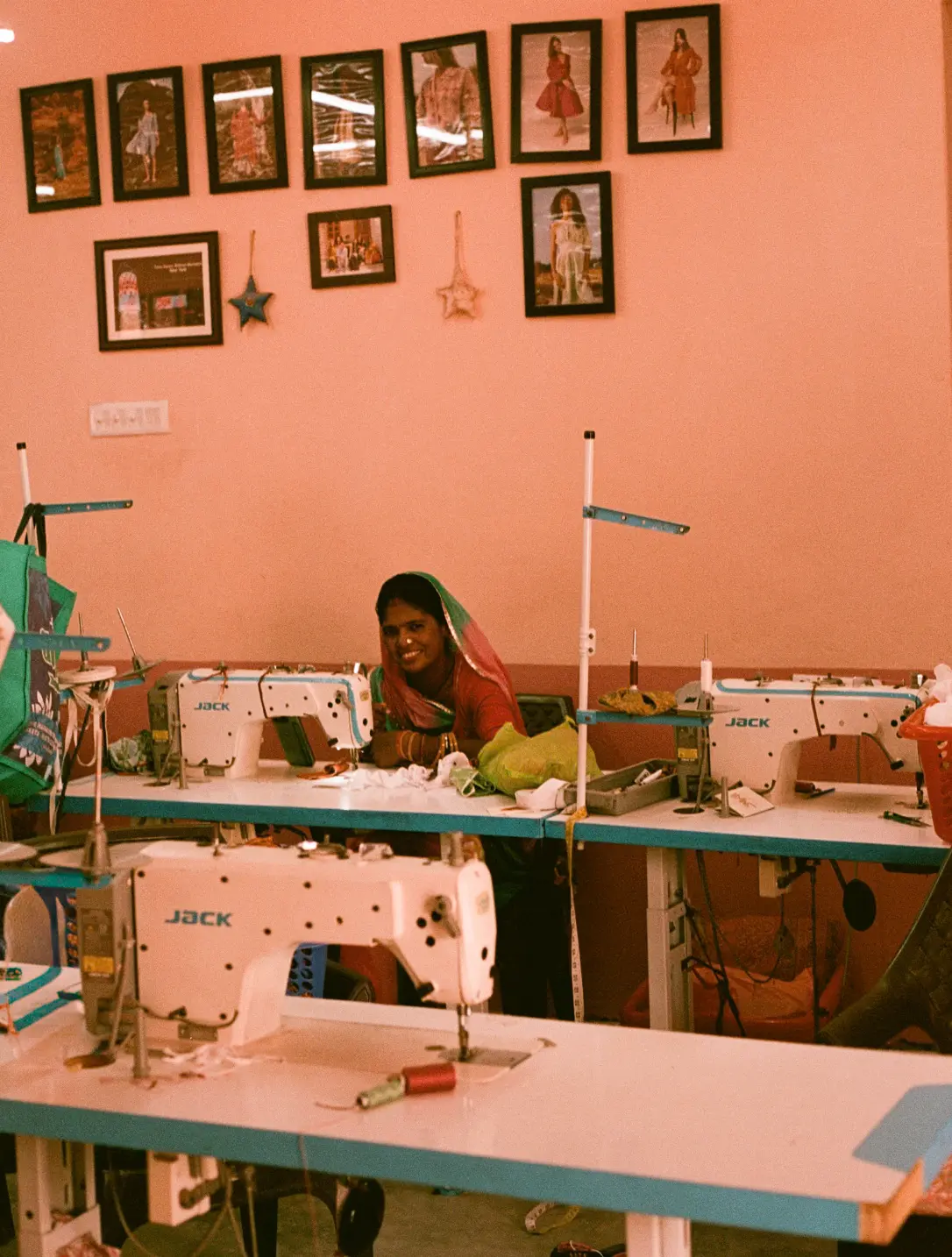
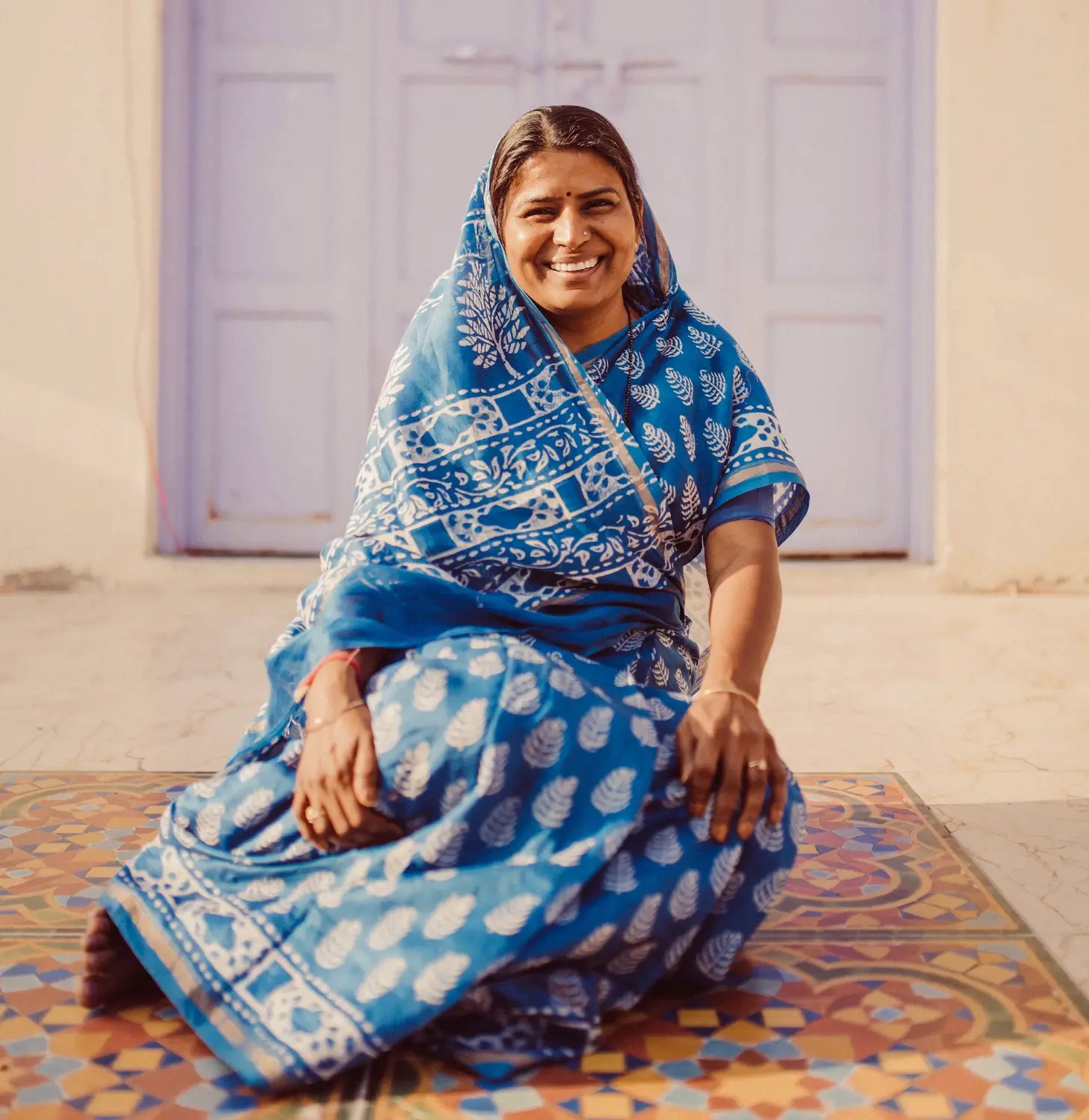
Madhu Vaishnav founded Saheli Women in 2015 with five women, a hunders dollars, and a single observation: every woman in her village owned a sewing machine, given to her as dowry, and not one of them was using it.
She had a dream and belief that when a woman earns her own income, everything around her changes. And she had the kind of quiet, steady determination that builds things that last.
Since then she has turned one room in a desert village into a living model of what fashion can be when it is built around women rather than built on them. Today, Saheli Women studio employs over 70 skilled female artisans out of which 90% serve as the primary providers for their families.
When women have access to work, societies prosper, economies strengthen, and the education of girls improves.
Skills that change everything.
Women come to Saheli at different points in their lives. Some have never worked outside the home. Some arrive simply with a dream and no clear path to it.
They leave as artisans. As weavers. As natural dye specialists, embroiderers, cutters, stitchers. As team leaders and trainers and managers. The collective is constantly upskilling, not because it has to, but because it believes that a woman who keeps learning keeps becoming.
Wages at Saheli are 50% above the regional average for similar work. But the numbers only tell part of the story. The other part is what happens when a woman in rural Rajasthan earns her own money for the first time. She sends her children to school. She makes decisions. She has choices. The ripple moves outward in every direction — through her family, her village, her children who will grow up knowing something different is possible.
Why Theā Ma collaborates with Saheli.
Theā Ma's Duality Collection, the Aphrodite and Hera dresses in mulberry silk, is made in collaboration with Saheli Women.
The connection was not accidental. Both Theā Ma and Saheli are built around the same belief: that women deserve beautiful work, made in beautiful conditions, that creates something beautiful in the world. When we found each other, it felt less like a business decision and more like recognition.
When you wear Theā Ma, you wear the hands of these women. Their skill, their laughter, their becoming. We are grateful every day for that.
Sustainable and ethical solutions lie in cultural heritage. These craft practices are slow, renewable, and work in symbiosis with nature rather than against it.